
Ankle injuries are one of the most common musculoskeletal injuries, affecting everyone from elite athletes to weekend walkers. Whether you've rolled your ankle playing sport, stepping off a curb, or hiking on uneven ground, how you manage the injury in the first few days can have a significant impact on your recovery.
The good news? Most ankle injuries recover well with the right treatment and rehabilitation.
What Happens When You Roll Your Ankle?
The majority of ankle injuries involve a lateral ankle sprain, where the foot rolls inward (inversion), overstretching or tearing the ligaments on the outside of the ankle.
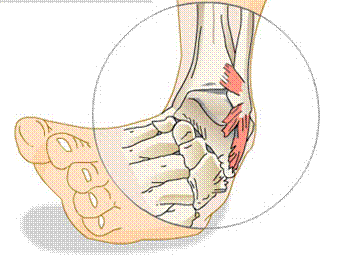
Common symptoms include:
Pain around the outside of the ankle
Swelling
Bruising
Difficulty walking or bearing weight
A feeling of instability or "giving way"
The severity can range from a mild ligament stretch (Grade I) to a complete ligament tear (Grade III).
What Should You Do Immediately After the Injury?
Current best practice recommends following the PEACE & LOVE principles:
PEACE (First 1–3 Days)
P – Protect
Reduce activities that increase pain during the first 1–3 days. You don't necessarily need complete rest, but avoid movements that significantly aggravate the injury.
E – Elevate
When possible, elevate your ankle above heart level to help reduce swelling.
A – Avoid Anti-inflammatory Medication
While anti-inflammatory medications may reduce pain, inflammation is an important part of tissue healing. They should not be used routinely in the early stages unless recommended by your healthcare provider.
C – Compress
Use a compression bandage or ankle sleeve to help manage swelling and provide support.
E – Educate
Avoid relying solely on passive treatments. Active rehabilitation is the key to achieving the best long-term outcomes.
LOVE (After the First Few Days)
As pain begins to settle, focus on gradually returning to movement.
L – Load
Begin gentle weight-bearing and movement as tolerated. Pain can be used as a guide—some discomfort is acceptable, but pain should not progressively worsen.
O – Optimism
Recovery is influenced by both physical and psychological factors. Staying positive and understanding the healing process can improve outcomes.
V – Vascularisation
Introduce low-impact cardiovascular exercise, such as cycling or swimming, as symptoms allow. This promotes circulation and supports healing.
E – Exercise
Progressive rehabilitation restores:
Strength
Balance
Mobility
Coordination
Confidence
These are essential for preventing recurrent ankle sprains.
Should You Ice Your Ankle?
Ice can help reduce pain in the short term and may make the ankle feel more comfortable. However, research suggests that icing does not speed up healing and should be used primarily for pain relief rather than as a treatment to accelerate recovery.
If using ice:
Apply for 10–15 minutes at a time.
Wrap the ice pack in a towel.
Allow the skin to return to normal temperature before reapplying.
When Should You See a Physiotherapist?
Not every ankle sprain requires an X-ray, but every significant ankle injury benefits from an accurate assessment.
You should seek assessment if:
You are unable to walk four steps immediately after the injury or the following day.
Swelling or bruising is severe.
Pain persists beyond a few days.
Your ankle feels unstable.
You continue to sprain the same ankle repeatedly.
You're aiming to return to sport or an active lifestyle safely.
A physiotherapist can determine the severity of the injury, identify whether other structures (such as tendons or the syndesmosis) may be involved, and develop a rehabilitation program tailored to your goals.
Why Rehabilitation Matters
Many people stop treatment once the pain settles. Unfortunately, pain often improves before the ligaments, muscles, and balance systems have fully recovered.
Without proper rehabilitation, individuals are more likely to experience:
Recurrent ankle sprains
Chronic ankle instability
Persistent pain
Reduced sporting performance
Long-term ankle problems
Research shows that structured exercise therapy significantly reduces the risk of future ankle sprains.
The Bottom Line
Most ankle sprains recover well, but the first few days are important. Protect the ankle, manage swelling, gradually return to movement, and begin a structured rehabilitation program as early as appropriate.
If you're unsure about the severity of your injury, or your recovery isn't progressing as expected, booking an assessment with a physiotherapist can help ensure you're on the right path back to work, sport, and everyday activities.
