
Generalised neck pain is one of the most common concerns that we treat as Physiotherapists.
It can all start with as little as a random head turn while checking car blindspots, waking up from a funny sleep position, or it can even be as a result of recent life stressors. So why in particular does it seem to hurt most when turning your head?
Neck pain occurs due to a number of different anatomical reasons, including joints, muscles, movement mechanics and more.
The Anatomy:
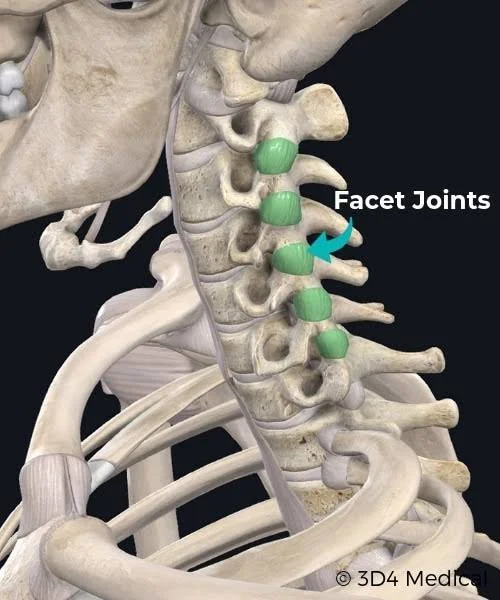
Image of cervical facet joints
The neck is made up of the cervical spine, alongside a number of different muscles all serving a distinct purpose such as holding the head upright, turning your neck and even just stabilising while you walk.
Cervical vertebrae consist of multiple joints responsible for the common neck movements you do everyday.
The facet joint shown in the image above is most responsible for facilitating head turning or twisting, and can often be one of the main causes of neck pain when turning your head.
This is called Facet Joint Irritation, and can additionally result in the muscles in your neck tightening or seizing up, preventing normal movement and causing pain.
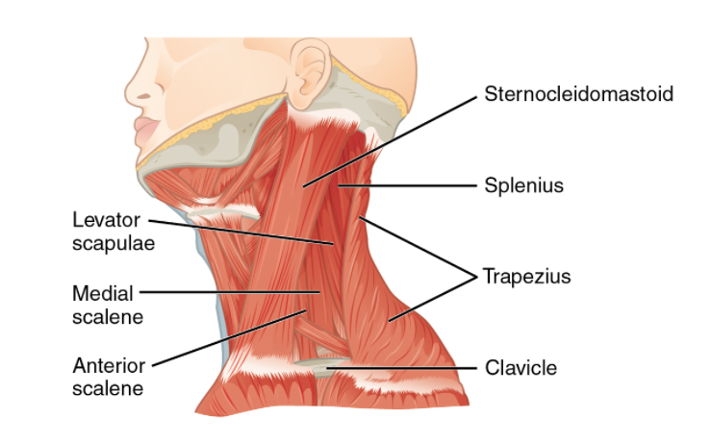
Muscles of the neck
As mentioned above, facet joint irritation may result in a muscle reaction such as tightening or spasms.
Some of the common culprits include:
Sternocleidomastoid
Responsible for neck rotation to opposite side, and side bending to same sideLevator Scapulae
Responsible for neck extension, neck rotation and side bending to same sideUpper Trapezius
Responsible for neck extension and neck rotation to opposite sideAll three of these muscles are involved in movements such as head checks while driving, maintaining upright posture while studying or working, and running around playing with family.
What Can Help?
1. Neck mobility exercises:
This can include gentle neck turning, looking up/down and bending side to side. This will help to gradually restore your movement, although it is important to not push into pain too much as it can aggravate further.
2. Manual therapy:
Hands on treatment from a Physiotherapist, including soft tissue techniques and joint mobilisation, may help reduce pain and improve neck movement. This can be most helpful in the painful first 1-2 days to best improve symptoms and return to daily life as soon as possible.
3. Upper back + neck strengthening:
Targeted exercises for the deep neck flexors, cervical extensors and surrounding back/shoulder muscles can improve strength, support and tolerance to everyday activities.
A physiotherapist can help recognise lacking or overactive muscles, and provide specific exercises to reduce risk of recurrence in future
Still Experiencing Neck Pain?
If you're struggling with neck stiffness or pain when turning your head, the team at Heathmont Physio and Sports Medicine can help identify contributing factors and develop a treatment plan suited to your needs.
Book an appointment with our physiotherapy team to get started on improving your neck movement and getting back to your normal activities.
https://book.nookal.com/bookings/book/08b79DE2-5eb6-0ec3-C96B-aaff37D65ad5/location/ECALY
If you feel it may be more severe due to symptoms such as:
Severe headaches, vision issues
Loss of function in arms/legs/bladder
Difficulty swallowing/breathing/speaking
Then please present to your nearest hospital emergency department.
